Building Real-World Tech Experiences
A fully designed educational programme by Leagues of Code where students experienced real-world software development through hands-on product building in Barcelona.
A fully designed educational programme by Leagues of Code where students experienced real-world software development through hands-on product building in Barcelona.
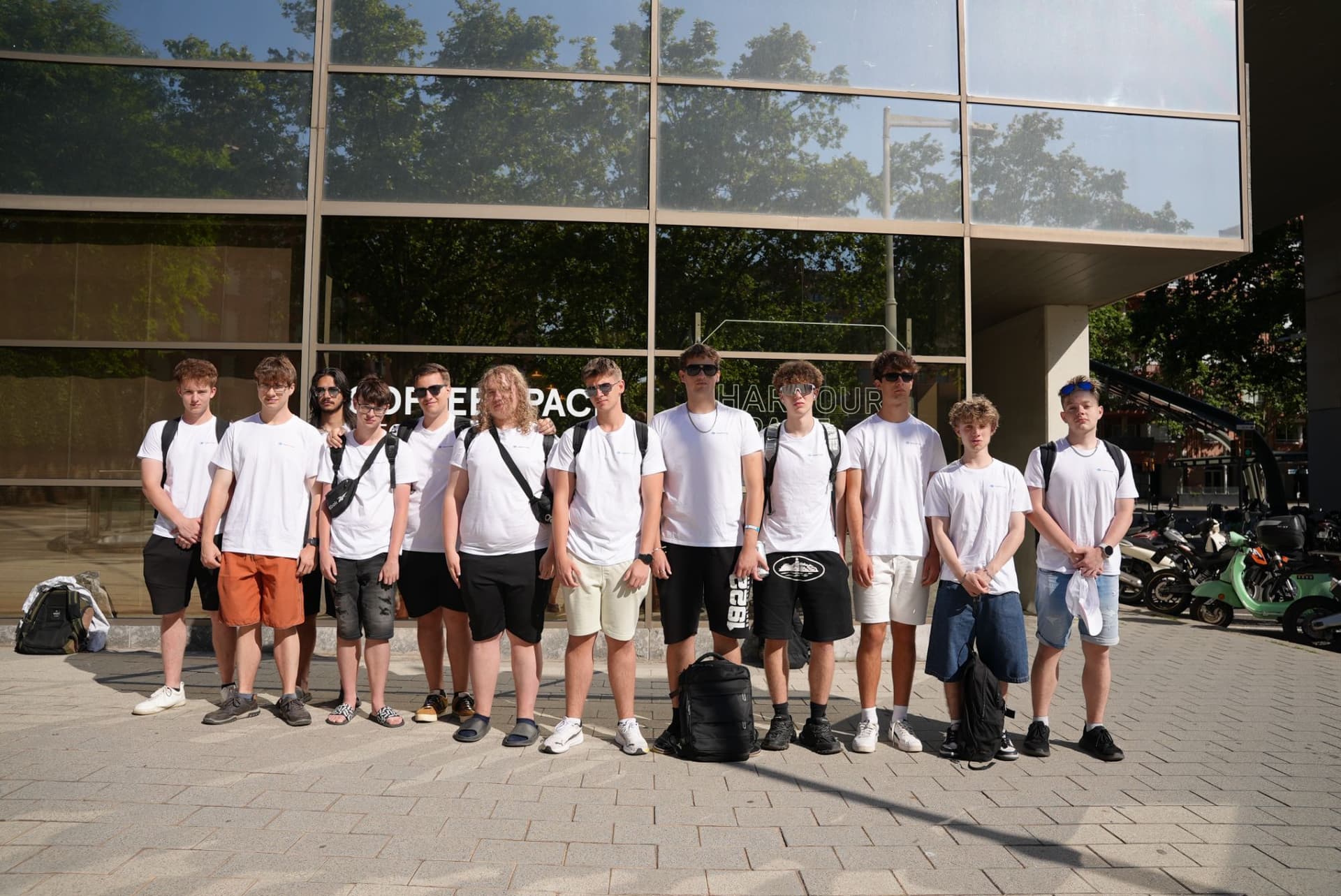
We recently wrapped up a 2-week educational programme in Barcelona with a group of ~18-year-old students from the Czech school NOSCH. The entire experience was designed and delivered end-to-end by us at Leagues of Code, with a focus on something very simple: letting students experience what it actually feels like to build real technology products, not just learn about them.
Today marked their final presentations.
This was already the third time NOSCH joined us — after previous editions involving both students and teachers — and each time the collaboration has grown stronger. Interestingly, they continue to choose this programme over their standard Erasmus pathway, which says a lot about the value they find in a more hands-on, product-driven experience.
A different way of learning
From the beginning, the idea behind the programme was not to replicate a classroom, but to create something much closer to how real teams actually work in tech.
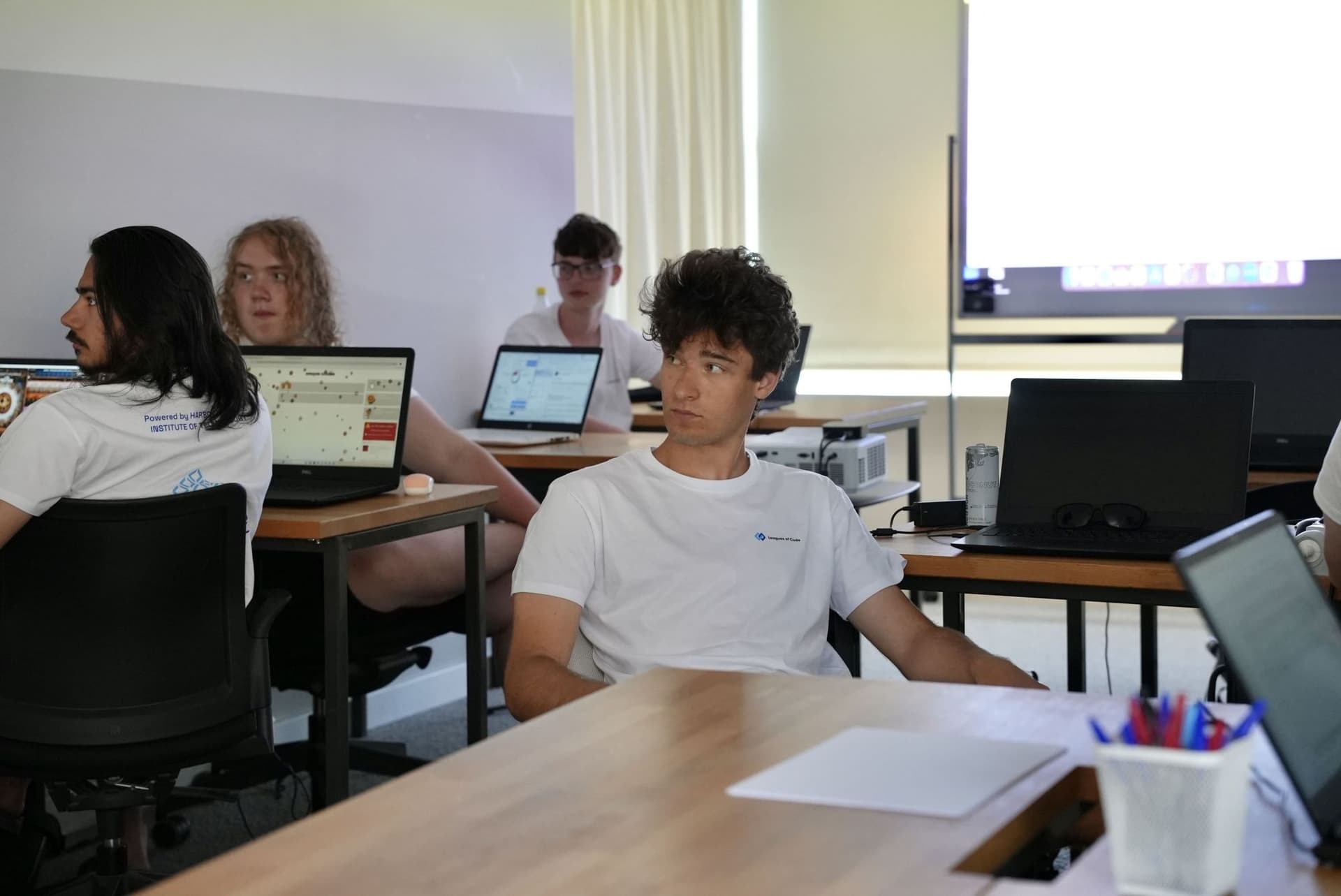
Each day followed a simple but intentional structure. Mornings were focused on learning and exploration: programming fundamentals, product thinking, UI/UX design, and backend concepts. The goal was exposure rather than depth, helping students understand how different parts of software development connect.
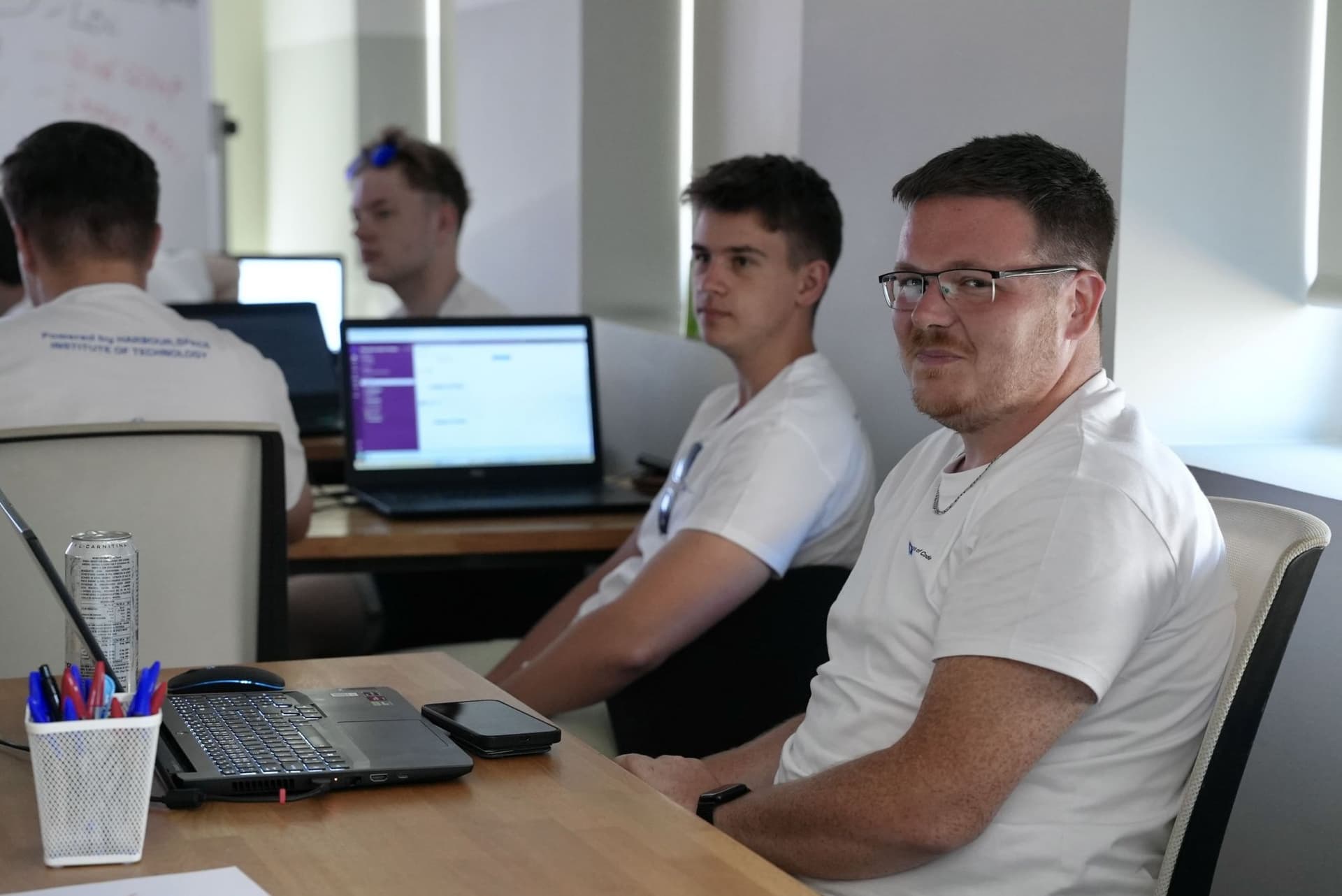
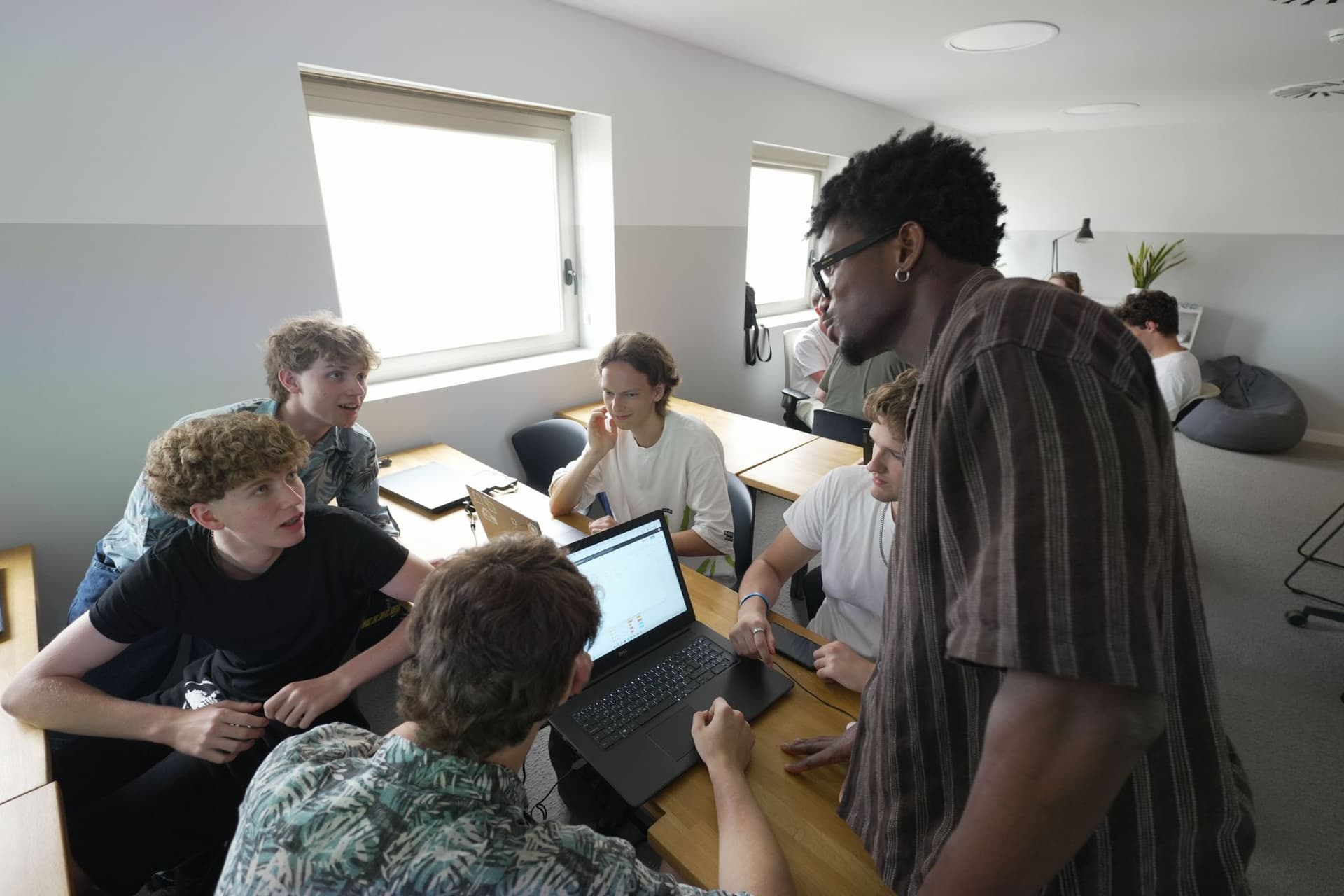
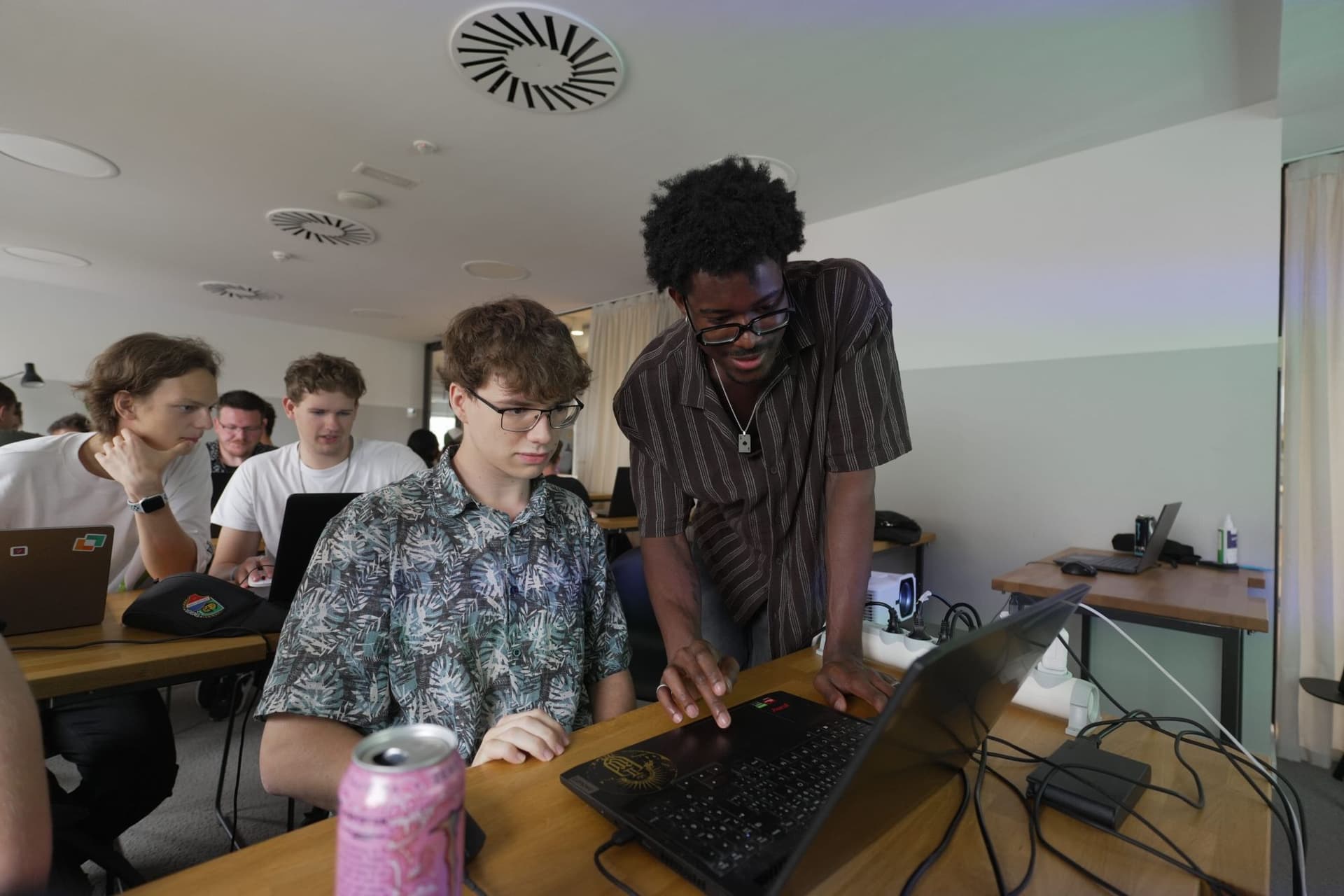
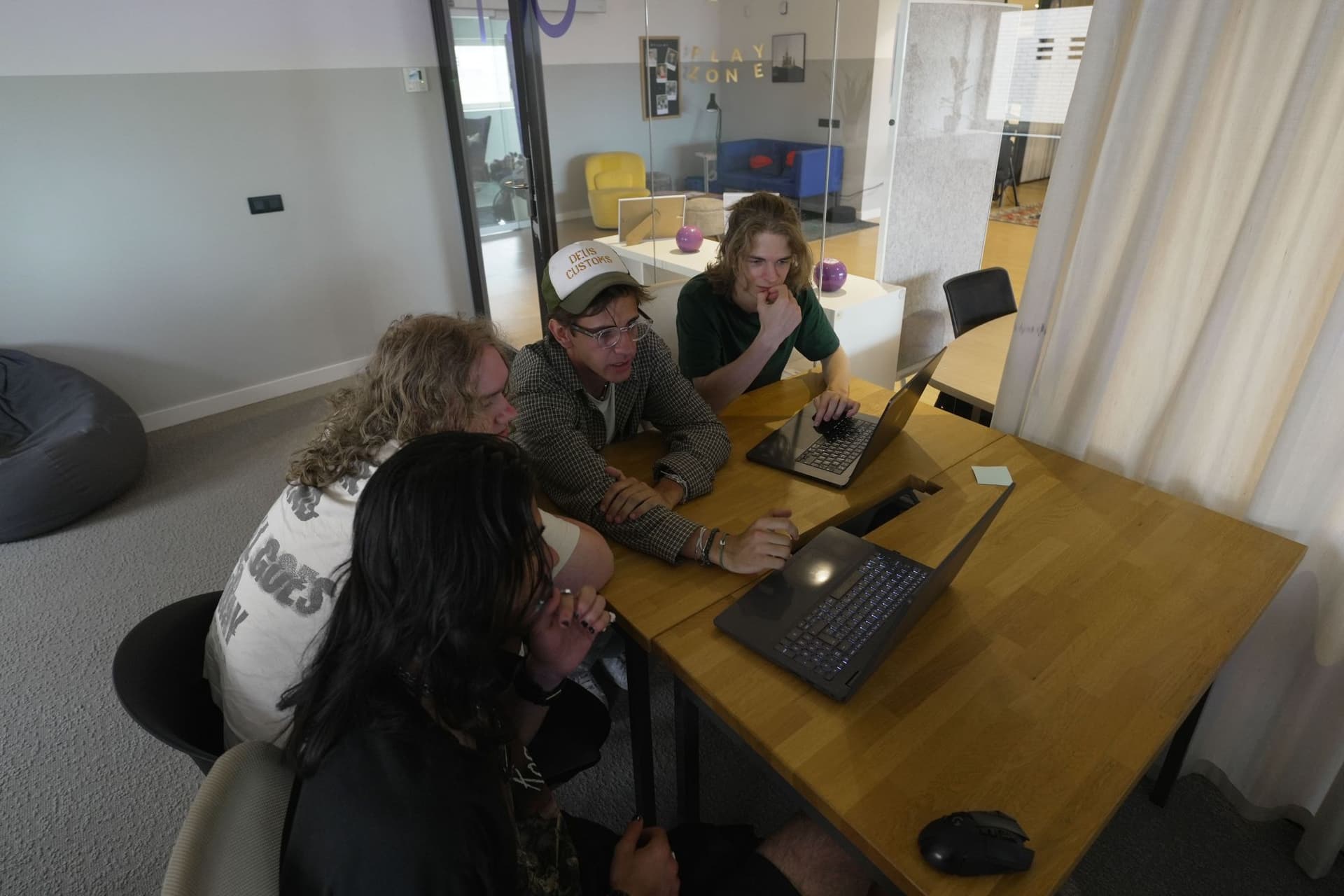
In the afternoons, everything changed. Students worked in teams, using real industry tools and workflows, and focused entirely on building. No simulations, no toy exercises, just real development, real constraints, and real decisions.
Tools & workflow
A key part of the experience was introducing students to how modern products are actually built in industry.
Tools like Figma, GitHub, and Asana were not presented as “learning platforms”, but simply as what they are: the everyday infrastructure of product teams.
Very quickly, students stopped “using tools for practice” and started using them to actually ship work — managing tasks, reviewing code, and iterating on design like real teams do.
The projects
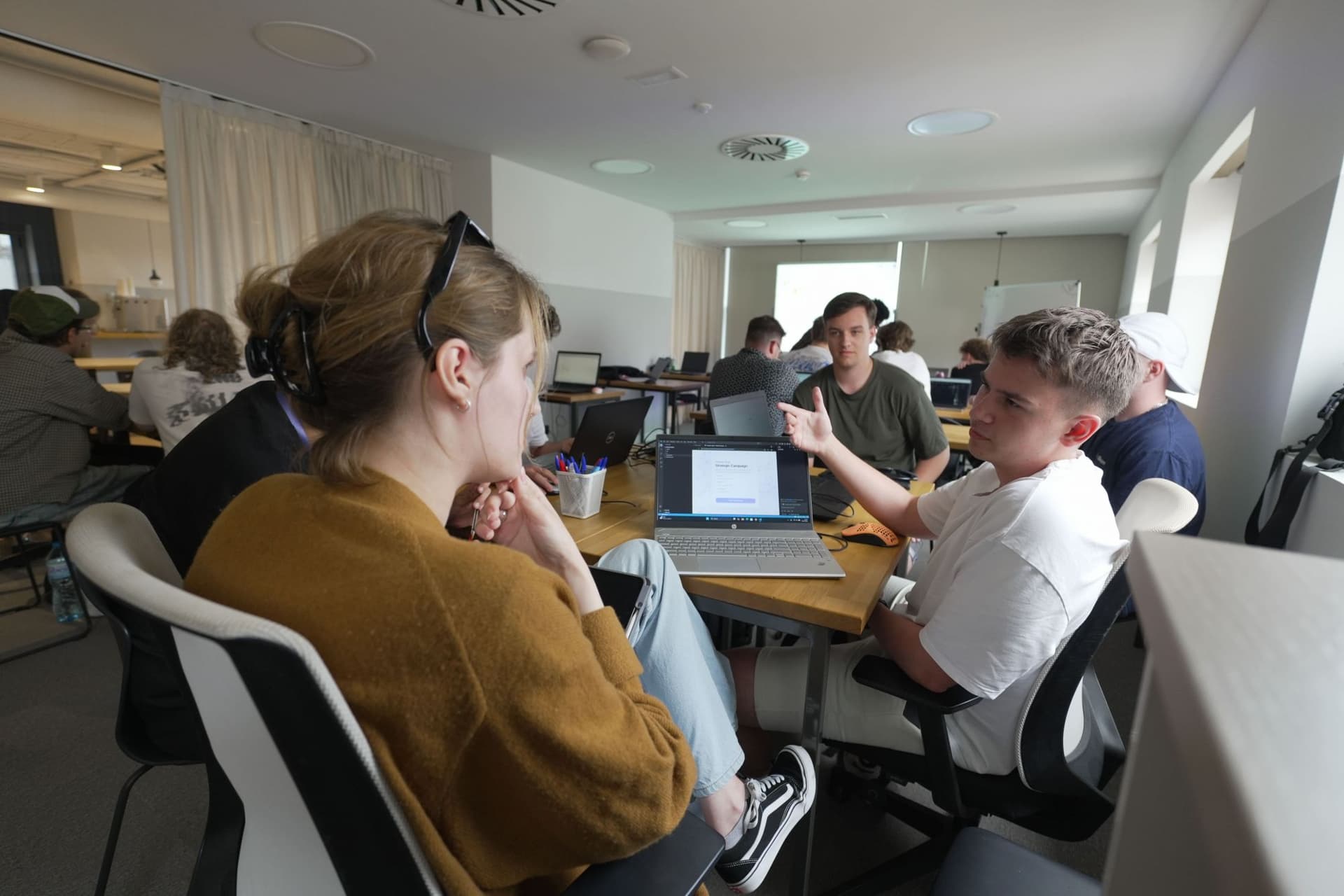
This year, students worked in small teams of four, each responsible for building a real product for the leaguesofcode.space platform.
One team built a community chat feature to help students communicate, ask questions, and support each other while learning. The idea came from a simple insight: learning becomes significantly more effective when it is social.
Another team developed a clicker game designed to improve engagement and retention on the platform. While playful, it had a clear product goal: give users a light, motivating break between more challenging learning sessions.
The third team built a gamified diagnostic test to assess students’ level in programming and mathematics. Instead of a traditional test format, they designed it as a game to make the experience more engaging and less intimidating.
Across all three projects, students went through the full product cycle: ideation, design, development, feedback, iteration, and user testing.
Beyond code
One of the most important shifts during the programme was how students started thinking about product decisions.
It wasn’t just about “can we build this?”, but also “should we build this?”, “for whom?”, and “why this over something else?”.
They worked with feedback, made trade-offs, and had to justify their decisions, learning that real-world development is as much about communication and product thinking as it is about writing code.
Barcelona as part of the experience
Outside of the programme, students experienced Barcelona, visiting places like Tibidabo, spending time at the beach, and exploring the city together.
This balance between intensive work and cultural experience helped create space for reflection, connection, and energy, something that naturally became part of the learning process itself.
What this represents for us
This programme is something we have designed and built entirely at Leagues of Code, not as a side initiative, but as a structured, scalable educational experience.
It sits at the intersection of education, product development, and real-world tech practice, and it continues to evolve with every iteration.
More importantly, this is not meant to be a one-off collaboration.
We are actively looking to expand and work with more schools and directors across Europe who want to give their students a more realistic introduction to programming, product development, and AI-driven technology.
Seeing students move from learning concepts in the morning to shipping real products by the end of the programme is exactly why this exists.
And we’re just getting started.
If your school is interested in organizing a similar programme for students, we’d be happy to talk. Contact us at hello@leaguesofcode.com.
Thanks for reading
If you're interested in further growth, take a look at our website to learn what your future could look like at Harbour.Space. Lastly, get in touch with us at hello@harbour.space to let us know your thoughts!