HTE401b
The Human Factor: Technology should strengthen it, not suppress it
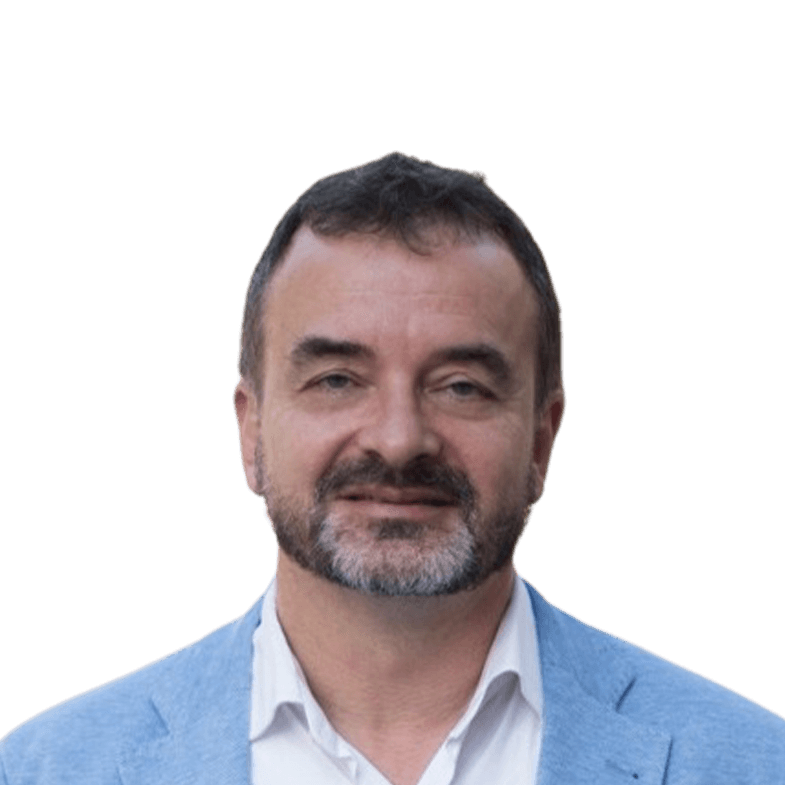
Faculty
Alfred Bosch
Writer and Historian
Course length
Duration
Total hours
Credits
Language
Course type
Fee for single course
Fee for degree students
Skills you’ll learn
Overview
This course will focus on the ethics of Science and Technology, and how progress and innovation in these fields is not relevant or valid if they do not contribute to social advancement. The human element is not only a factor to be considered, but rather the central and determining one; it is the force behind the origin, push, and purpose of any discovery or invention. New devices that do not take into account social needs and their projection, or the moment in time and cultural environment in which they are created, are inevitably doomed to failure. However, at the same time, failure is inextricably linked to success; it’s not just advisable to learn how to fail, but to a certain extent the process leading to success is the process of failing better each and every time.
Learning highlights
- Lecturing and debate will take a good part of the course, and very practical sessions will be scheduled to illustrate the ethics behind technology. The course will be divided into three blocks, one per week. The first one is about caring for people, which should be the driving force in any field of knowledge. The second one will be about what is “inventing” for people; what is the motive behind any technological advancement? And, the third week will be devoted to improving people’s lives, which is the ultimate goal of the course: proving that this can be done and that students have feasible projects to accomplish it.
Course outline
15 classes
Session 1
Ethics and Technology. Introductory session. Transhumanism; the digital transit from human to post-human. Creation of groups and selection of contact agents.
Session 2
The environment, the land, the roots. Nothing comes out of thin air.
Session 3
Social projection; is social care a measure of success or failure? Visit to contact agents and talk with guests.
Session 4
Human failure. How important is it to incorporate failure into the learning process? Visit to contact agents and talk with guests
Session 5
Ready to go. Final group set up. Culture and leisure. How does leisure encourage community dynamics? Visit to contact agents and talk with guests.
Session 6
Project plan presentation. Resources. Webs, books, places. Visit to the UPF library. Find examples of failed inventions or innovations.
Session 7
Innovation 1. Examples of failed innovations / useless inventions. Why?
Session 8
Innovation 2. Examples of failed innovations which finally proved to be useful. Why not initially and why finally?
Session 9
Innovation 3. Examples of innovations which had never been imagined and worked right away. Why?
Session 10
Draft day. Every group will have 15 mins to present its working draft and expose problems and achievements
Session 11
Visit to the Olympic Museum; why are some editions successful and others not? Why are people’s perceptions different?
Session 12
Social innovation. Guest, Social Innovation and Planning in Barcelona.
Session 13
Social projection in practical terms; examples and relevant cases. Presentations group 1 and group 2. Debate and feedback.
Session 14
Collective leisure in practical terms; examples and relevant cases. Presentations group 3 and group 4. Debate and feedback
Session 15
Human failure in practical terms; examples and relevant cases. Presentations group 5 and group 6. Debate and feedback.
Prerequisites
A contribution to an NGO or social grassroots organization will be required. This might take most of the mornings during the second and third week. Please bear in mind that you must be available for this brief sort of internship, which is added to class attendance in the evenings.
Students should come to the course ready to walk, with adequate footwear and also with a valid Barcelona transport card (eg T-Casual).
Methodology
The course will have a duration of 45 hours, covering three weeks (15 working days) with three hours per day. The lecturing slots will be from 17pm to 20pm. Some of the sessions will include outdoor lessons and practical visits, and indoor sessions as well.
During the second and third weeks, students will be required to work with a local NGO or social grassroots organization. Therefore, students will have to put aside time in the mornings for interacting and working with their local counterparts.
Grading
Alfred Bosch was born and raised in Barcelona, where he lives. Aside from Catalan and Spanish, he masters English, French and Portuguese and speaks basic German and Italian. Professor and researcher in academic institutions at home and abroad: Pompeu Fabra University, Autonomous University of Barcelona, Open University of Catalonia, Rovira i Virgili University, CIDOB, University of Chicago (USA), CEAN Bordeaux (France), University of London (UK), University of Ibadan (Nigeria), University of Witwatersrand (South Africa) and Hood College (Washington). He also chaired the African Studies Centre and completed a PhD dissertation on Nelson Mandela and the ANC.
Lucky to have a multi-faceted background. He was deeply involved in the organization of the 1992 Olympics of Barcelona. Columnist for various newspapers, he covered war conflicts around the globe. As a writer, he has published 20 different titles –including fiction and non-fiction- on a range of topics from African societies to the debate on European and Catalan issues. In politics, he has been congressman in Madrid, leader of his group in Barcelona City Council, vice- president of Metropolitan Barcelona in charge of International Affairs and Foreign Minister of the Catalan (Autonomous) Government. Glad to return to the world of knowledge.
See full profileApply for this course
The Human Factor: Technology should strengthen it, not suppress it
by Alfred Bosch
Total hours
45 Hours
Dates
Sep 26 - Oct 14, 2022
Fee for single course
€1500
Fee for degree students
€750
How to secure your spot
Complete the form below to kickstart your application
Schedule your Harbour.Space interview
If successful, get ready to join us on campus
FAQ
Will I receive a certificate after completion?
Yes. Upon completion of the course, you will receive a certificate signed by the director of the program your course belonged to.
Do I need a visa?
This depends on your case. Please check with the Spanish or Thai consulate in your country of residence about visa requirements. We will do our part to provide you with the necessary documents, such as the Certificate of Enrollment.
Can I get a discount?
Yes. The easiest way to enroll in a course at a discounted price is to register for multiple courses. Registering for multiple courses will reduce the cost per individual course. Please ask the Admissions Office for more information about the other kinds of discounts we offer and what you can do to receive one.