HTE405BKK
Applied Economics

Faculty
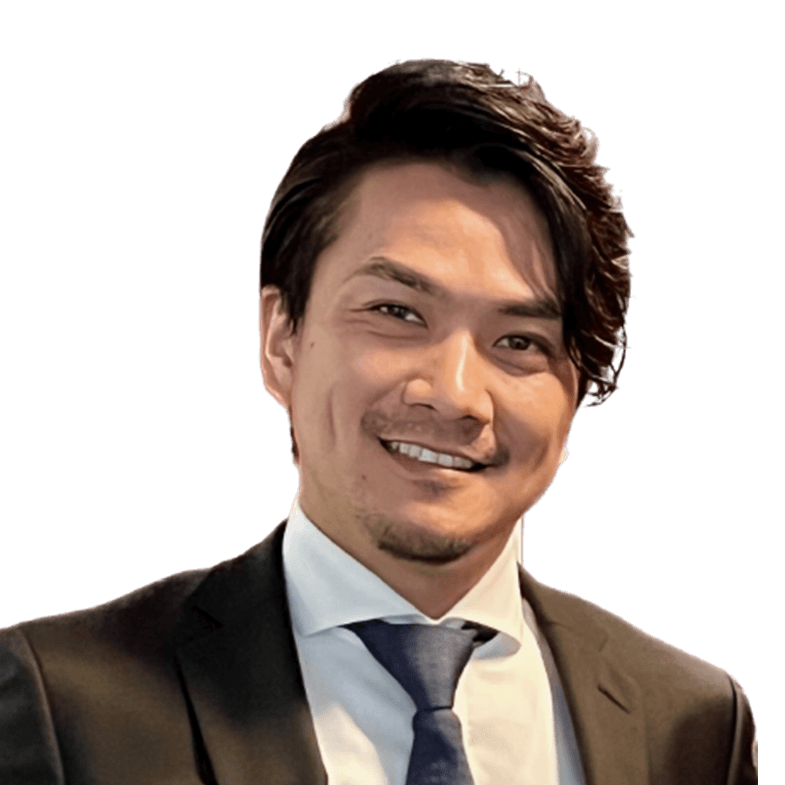
Ignacio Mas
Outside Director at Gojo & Company, Japan
Course length
Duration
Total hours
Credits
Language
Course type
Fee for single course
Fee for degree students
Skills you’ll learn
Overview
In this course, students will explore some of the major economic issues in today's global economy. In the process, they will learn some key economic concepts and develop a basic understanding of how the global economy works. The course aims to be free of ideology; instead, students will develop a critical understanding of the variety of points of view that may exist on any given issue, and they will confront established views and conventional wisdom against available data. Students will tend to focus on macro (or economy-wide) issues rather than on the microeconomics of how people and firms make decisions. Through this course, students will acquire the tools to develop their own point of view on the present state of the economy and what policies ought to be favoured.
Learning highlights
- This course will help demystify economic jargon and arguments and give students some sense of just how much we know and don't know about how the economy works.
- It will also help them understand better the economic news they read in newspapers and form their own ideas on key economic issues and policies of the day.
- Throughout the course, students will be able to apply the main concepts we explore in the classroom to their own country or country of choice.
Course outline
15 classes
Session 1
What underpins capitalism, and just how capitalist are modern economies?
Session 2
What determines the value of things?
Session 3
What is money and how does it work?
Session 4
To what extent are national budgets different to household or firm budgets?
Session 5
A dozen keywords that will make you sound like an economist.
Session 6
Globalisation: Should there be restrictions to the international movement of goods?
Session 7
Financialization: Why are banks so powerful and yet so prone to financial crises?
Session 8
Technological change: What drives innovation, and how does innovation drive the economy?
Session 9
Demographics: Ageing of the population, urbanisation, migration.
Session 10
Inter-generational dynamics: How to deal with rising public debt and global warming?
Session 11
Economic growth.
Session 12
Income inequality: within countries and across countries.
Session 13
Inflation
Session 14
Topics chosen by students.
Session 15
The state of economics: myths and realities.
Methodology
The course will rely heavily on class discussion. In any given class, first we will motivate the main topic with reference to current policy debates, relevant recent or historical data, and public pronouncements by prominent people. Then the teacher will offer a structure to discuss the issues arising from the topic and introduce the most useful economic concepts and tools for thinking through these issues. The bulk of our attention will be on looking critically at each issue from all the possible angles, and we will search for data on the internet as necessary to support the various arguments. We will refrain from seeking a common, unified conclusion; it will be up to each student to weigh the arguments and form their own overall views on the topic.
Each student will pick a country at the beginning of the course and will find and maintain a record of key data that is relevant to each topic that we discuss throughout the course. This will form a country dossier by the end of the course, which will be graded as an individual student activity.
In the first week, we will establish a shared base of understanding on basic economic concepts (such as capitalism, value, and money) and tools (such as public sector accounts, cost-benefit analysis, and analysis of trade-offs). In the second week, we will look at key modern drivers of the economy, such as globalised trade, financialization, technological change, climate change, and population ageing.
In the third week, we will look at what this all means in terms of recent and future prospects for economic outcomes such as growth, inequality, and inflation. We will conclude with a reflection on the nature of economics as a field of knowledge.
Grading
Ignacio is a non-executive director at Gojo & Company in Japan and Humo Bank in Tajikistan, Senior Fellow at the Fletcher School's Council on Emerging Market Enterprises at Tufts University, and an independent consultant.
During 2015-2020, Ignacio was co-founder and executive director at the Digital Frontiers Institute, a not-for-profit that develops professional development training courses around digital money and payments. Previously, he was Deputy Director in the Financial Services for the Poor program at the Bill & Melinda Gates Foundation and Senior Advisor at the Technology Program at CGAP. Ignacio has been Director of Global Business Strategy at Vodafone Group, Executive VP of Marketing and Account Management at DoCoMo interTouch, and Senior Manager responsible for telecoms investments in Europe for Intel Capital. Ignacio started his career as a financial economist at the World Bank.
See full profileApply for this course
Applied Economics
by Ignacio Mas
Total hours
45 Hours
Dates
Nov 13 - Dec 01, 2023
Fee for single course
€1500
Fee for degree students
€750
Explore related courses



How to secure your spot
Complete the form below to kickstart your application
Schedule your Harbour.Space interview
If successful, get ready to join us on campus
FAQ
Will I receive a certificate after completion?
Yes. Upon completion of the course, you will receive a certificate signed by the director of the program your course belonged to.
Do I need a visa?
This depends on your case. Please check with the Spanish or Thai consulate in your country of residence about visa requirements. We will do our part to provide you with the necessary documents, such as the Certificate of Enrollment.
Can I get a discount?
Yes. The easiest way to enroll in a course at a discounted price is to register for multiple courses. Registering for multiple courses will reduce the cost per individual course. Please ask the Admissions Office for more information about the other kinds of discounts we offer and what you can do to receive one.