DS206
Introduction to Machine Learning

Faculty
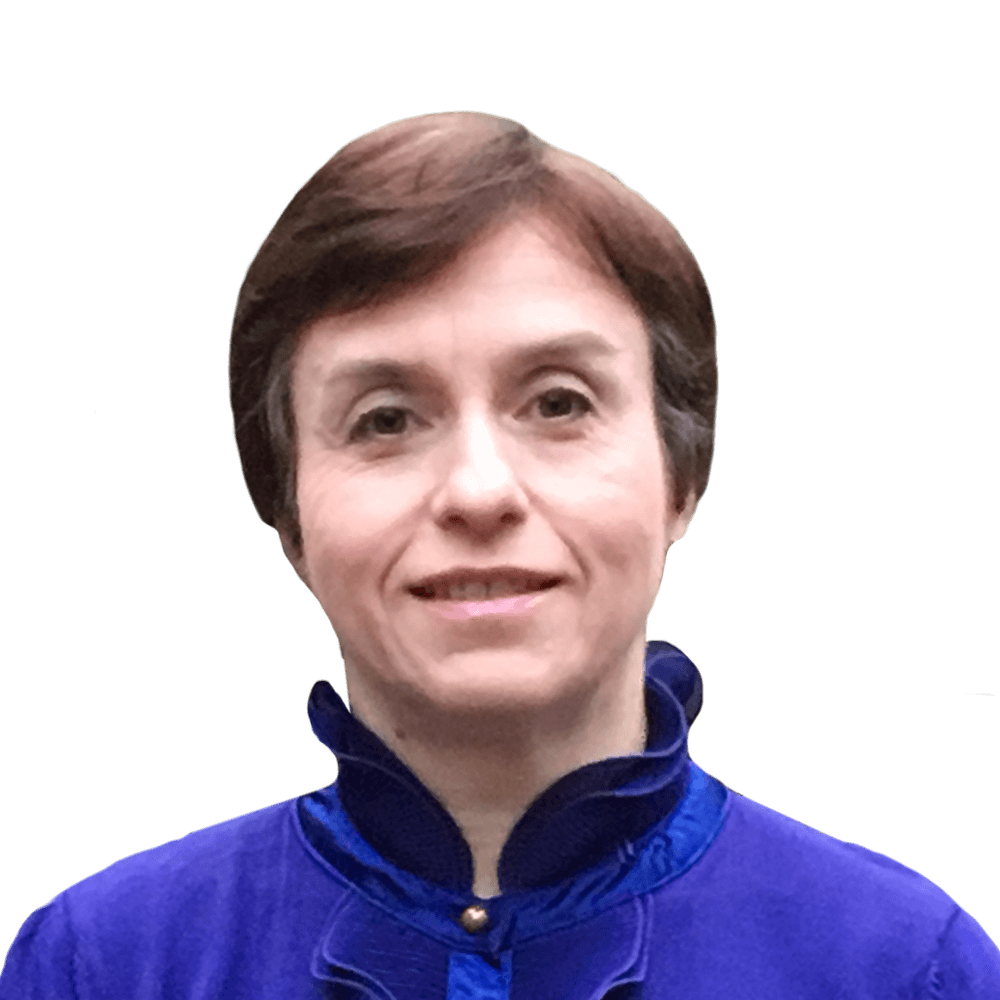
Igor Slinko
Computer Vision Engineer at SportTotal.tv
Course length
Duration
Total hours
Credits
Language
Course type
Fee for single course
Fee for degree students
Skills you’ll learn
Overview
By completing this course, students will gain fundamental knowledge and practical skills in machine learning, their first step towards becoming a Data Scientist. By the end of the course, the student’s GitHub account will have a couple of ML projects they will be proud of. Most importantly, students will learn to look at the world around them from the point of view of data analysis.
Learning highlights
- Ability to formulate a problem in terms of machine learning
- Knowledge of specific machine learning tasks such as regression and classification
- Knowledge of classical machine learning algorithms: linear models, decision trees, random forest, k nearest neighbours, and gradient boosting
- Ability to train a machine learning model for a specific business task
- Knowledge of basic metrics for evaluating the quality of models
Course outline
15 classes
Snow Summit
-
Snow Summit
-
Session 1
- Types of ML: Computer Vision, Natural Language Processing, Classical models for table data.
- Tasks of learning: supervised, unsupervised, reinforcement.
- Terms: dataset, object, feature, target value, loss function.
Session 2
- Utility libraries: Numpy library. Pandas library.
Session 3
- Linear model for regression task.
- Solving price prediction problem in Excel.
- Scikit-learn library. Train/test split. Underfitting and Overfitting.
Session 4
- Categorical features and one-hot-encoding.
- Multicollinearity issue and regularization.
- Gradient descent algorithm.
Session 5
- Classification problem.
- Logistic regression algorithm.
- Cross-entropy loss function.
- Multiclass and multilabel classification. SoftMax function.
Session 6
- K nearest neighbours algorithm. “Curse of dimensionality”. Different distance metrics.
Session 7
- Decision trees and random forest algorithms.
Session 8
- Gradient boosting algorithm. CatBoost library.
Session 9
- Metrics for regression and classification tasks.
Session 10
- Intro to Neural Networks.
- Terms: neuron, layer, activation function, weights.
Session 11
- Intro to Computer Vision.
- Types of tasks in CV. Convolutional networks. Classification task using Keras library.
Session 12
- Intro to Natural Language Processing.
- Types of tasks in NLP. Transformer architecture. Text generation using GPT-2 from HuggingFace library.
Session 13
- Final contest
Course materials
Media
Prerequisites
PythonBasic, knowledge of linear algebra and calculus. Students have to remember what the equation for the plane looks like and what the gradient is
Methodology
Each lesson lasts 3 hours. During that time, we study new material and analyze homework for the first hour and a half. Then, we work on a practical task in the second hour and a half. Each week, students will have a contest or challenge (like kaggle.com) to train a model for a particular task.
Grading
Ex. Samsung AI Center, Yandex, VK, Brickit.app, OneSoil Master of Computer Science at MIPT
Igor Slinko obtained a Master's degree in Mathematics and Computer Science at MIPT (Moscow). After that, he worked as C++ and Python developer at Yandex. Several years later he turned his attention to Data Science and Computer Vision. He switched to a researcher position at Mail.ru, and also started teaching Machine Learning at HSE (Moscow). Then he became team lead at a newly developed Samsung AI Center, where he developed Computer Vision algorithms in Robotics. He also collaborated with Michael Romanov to create an open course called "Neural Networks and Computer Vision" which amassed an audience of 50k students.
See full profileApply for this course
Introduction to Machine Learning
by Igor Slinko
Total hours
39 Hours
Dates
Jan 31 - Feb 16, 2024
Fee for single course
€1500
Fee for degree students
€750
Explore related courses



How to secure your spot
Complete the form below to kickstart your application
Schedule your Harbour.Space interview
If successful, get ready to join us on campus
FAQ
Will I receive a certificate after completion?
Yes. Upon completion of the course, you will receive a certificate signed by the director of the program your course belonged to.
Do I need a visa?
This depends on your case. Please check with the Spanish or Thai consulate in your country of residence about visa requirements. We will do our part to provide you with the necessary documents, such as the Certificate of Enrollment.
Can I get a discount?
Yes. The easiest way to enroll in a course at a discounted price is to register for multiple courses. Registering for multiple courses will reduce the cost per individual course. Please ask the Admissions Office for more information about the other kinds of discounts we offer and what you can do to receive one.