Image and Video Analysis
Faculty
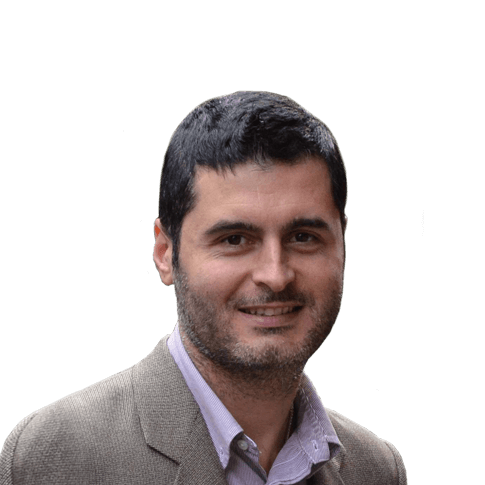
Archontis Giannakidis
PhD, Medical Image Analysis Scientist, National Heart and Lung Institute, Imperial College London, UK
Course length
Duration
Total hours
Credits
Language
Course type
Fee for single course
Fee for degree students
Skills you’ll learn
Overview
In this module, you will learn the science behind how images and videos are formed, altered, stored, and used. Digital images and videos are everywhere nowadays in a vast number of applications, such as medicine, biology, robotics (computer vision), surveillance, security, biometrics, TV and entertainment, astronomy, and art, to name a few. The ability to process image and video signals is therefore an incredibly important skill to master for engineering/data science students, software developers, and practicing scientists. Digital image and video processing continues to foster the multimedia technology revolution we are experiencing today. Some important examples of image and video processing include the removal of degradations, the compression and transmission of images and videos for economical storage and efficient transmission. In this module, not only will you learn the theory and mathematical framework behind fundamental processing tasks, including image/video enhancement, recovery, segmentation, encoding and compression, but you will also acquire knowledge on how to perform these key processing tasks in practice using state-of-the-art algorithms and tools. Emphasis on the special role sparsity plays in modern image and video processing will also be given. In all cases, example images and videos pertaining to specific application fields will be used.
Learning highlights
- By the end of this module, students will be able to identify real-world situations where image and video analysis tools can be advantageous. A main objective of this module is to provide an in-depth understanding of the theory and mathematical framework behind fundamental image/video processing tasks. This module will develop the student's ability to utilise state-of-the-art algorithms to perform key image/video processing tasks, such as denoising, recovery, segmentation, classification, and compression. The students will also learn how to evaluate the performance of these techniques. The learner will be able to reflect on the special role of sparsity in modern image and video processing.
Course outline
4 classes
Session 1
Introduction (human visual system, image formation, analogue, digital, sampling and quantization, etc.)
Session 2
Signals and systems (convolution, correlation, filtering spatial domain, etc.)
Session 3
Discrete 2D Fourier Transform and sampling (frequency domain filtering)
Session 4
Motion estimation and color representation and processing.
Prerequisites
This course is one of three in a wholistic series.
Students that have already taken MSL-111 and those with prior experience with HTML, CSS, and Javascript building simple web pages will be good candidates for this module.
Dr. Archontis Giannakidis is a Medical Image Analysis Scientist with the National Heart and Lung Institute (NHLI) of Imperial College London, UK.
He received his BSc in Electrical and Computer Engineering from the Aristotle University of Thessaloniki, Greece, and his MSc (with distinction) in Modern Digital and Wireless Communications from the University of Leeds, UK. In 2010, he was awarded his PhD in Electronic Engineering (area: inverse problems/vector-field tomographic reconstruction) from the University of Surrey, UK.
See full profileApply for this course
Image and Video Analysis
by Archontis Giannakidis
Total hours
45 Hours
Dates
Nov 27 - Dec 15, 2017
Fee for single course
€1500
Fee for degree students
€750
How to secure your spot
Complete the form below to kickstart your application
Schedule your Harbour.Space interview
If successful, get ready to join us on campus
FAQ
Will I receive a certificate after completion?
Yes. Upon completion of the course, you will receive a certificate signed by the director of the program your course belonged to.
Do I need a visa?
This depends on your case. Please check with the Spanish or Thai consulate in your country of residence about visa requirements. We will do our part to provide you with the necessary documents, such as the Certificate of Enrollment.
Can I get a discount?
Yes. The easiest way to enroll in a course at a discounted price is to register for multiple courses. Registering for multiple courses will reduce the cost per individual course. Please ask the Admissions Office for more information about the other kinds of discounts we offer and what you can do to receive one.