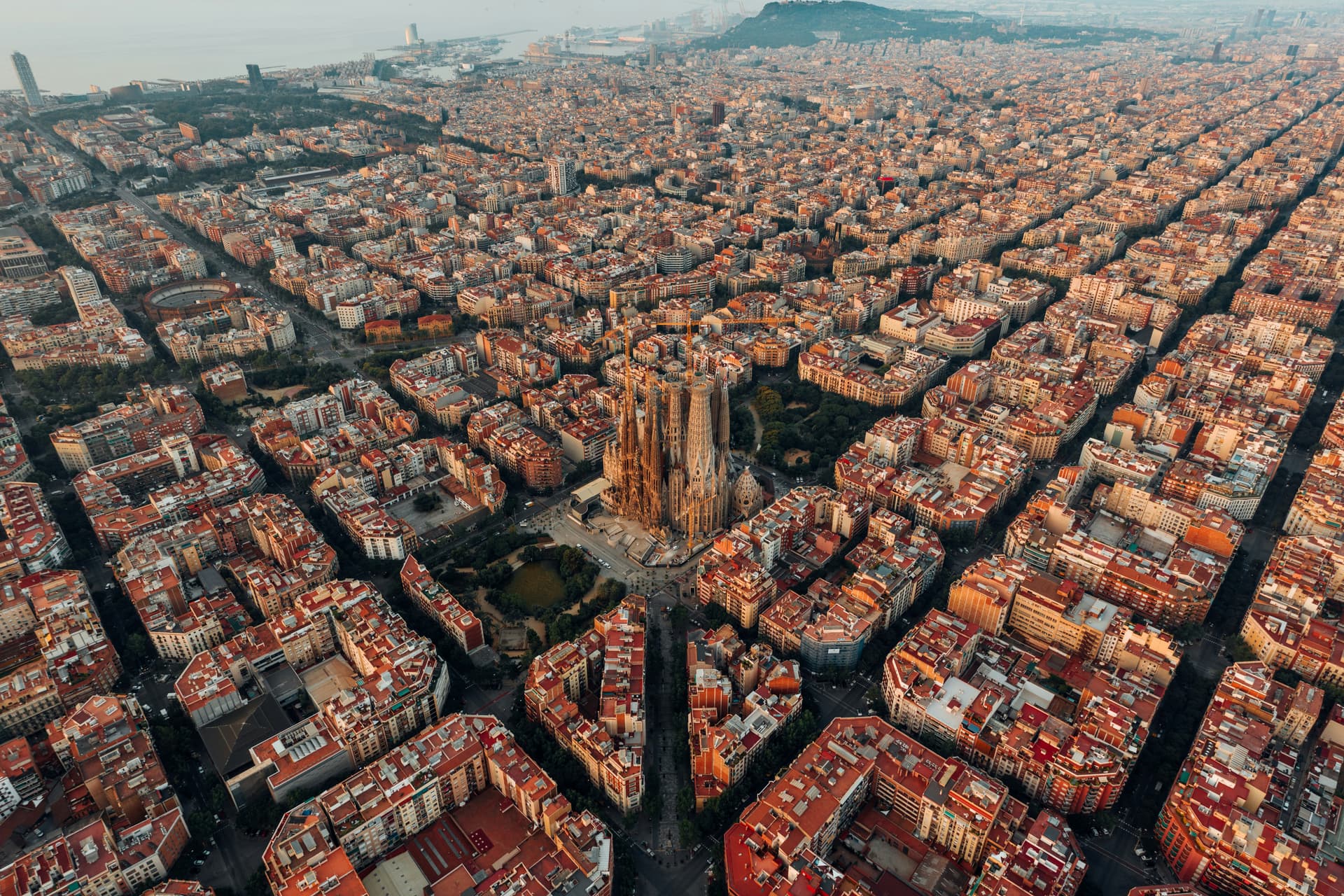
Barcelona Is the Best City to Study — and We Can Prove It
From a campus five minutes from the beach to a city that never runs out of things to do, Barcelona makes a compelling case for being the ultimate place to build your future. Here's why students who choose Barcelona don't just get a degree, they get a life.


Social Media Specialist
From a campus five minutes from the beach to a city that never runs out of things to do, Barcelona makes a compelling case for being the ultimate place to build your future. Here's why students who choose Barcelona don't just get a degree, they get a life.
There's a version of the "best city to study" conversation that goes: rankings, employment rates, faculty-to-student ratios. All important. All a little dry. Then there's the version where someone who studied in Barcelona tells you about their Tuesday: a morning seminar, lunch with classmates from four different countries, a late afternoon swim, tapas somewhere loud and cheap, and a rooftop with a view of the Sagrada Família lit up at dusk. Rankings don't quite capture that.
Barcelona is a city that does something rare: it takes your academic ambitions seriously and makes the rest of your life genuinely worth living. For students at Harbour.Space University, that's not a happy accident, it's the whole point.
The Beach Is Not a Bonus. It's a Feature.
Let's get this out of the way immediately, because it matters more than it sounds.
Harbour.Space's campus sits less than five minutes from the Mediterranean. Not "close to the beach" in the way cities sometimes claim, we mean step outside, walk five minutes, and you're there. Shoes off, sand underfoot, sea in front of you. That's the actual commute from class to coastline.
For a student, this changes the texture of daily life in ways you don't fully anticipate until you're living it. A tough week of deadlines feels different when Friday afternoon means a swim. Study groups migrate to the seafront. The beach becomes a decompression chamber, always available, always free and the fact that your university put it that close wasn't an accident.
Barcelona has over four kilometres of urban beaches, and they're genuinely good, clean water, consistent sun for most of the academic year, and a waterfront promenade that makes even a walk between classes feel like something worth taking slowly. Other great university cities have parks. Barcelona has the Mediterranean (and also the parks ;).
A City That Matches Your Energy (whatever It Is)
Barcelona has a talent for satisfying very different kinds of people at the same time. It's one of the few places where the tech crowd, the art crowd, the nightlife crowd, and the slow-coffee-on-a-Sunday crowd all feel equally at home.
For students, this matters because your interests don't pause when you enroll. The city has a thriving startup and tech ecosystem, particularly relevant for Harbour.Space students in tech, design, and business, with regular meetups, conferences, and networking events that blur the line between campus life and professional life in the best possible way.
If your thing is music, Barcelona hosts Primavera Sound and Sónar, two of Europe's most respected festivals. If it's food, the city is a destination in itself, from the chaos and colour of La Boqueria to neighbourhood restaurants where a full lunch with wine costs less than a sandwich in most capital cities. If it's sport, FC Barça plays at one of the most iconic stadiums in the world, and the city's cycling and running culture means you'll have no excuse to stop moving.
There is genuinely always something happening. The challenge in Barcelona isn't finding things to do, it's choosing.
Culture That You Don't Have to Try to Find
Some cities make you work for their culture. Barcelona puts it in front of you whether you're looking for it or not.
Gaudí is the obvious starting point, and for good reason. The Sagrada Família is one of the most astonishing buildings on earth, the kind of thing that reshapes your sense of what architecture can be. Park Güell sits above the city like a fairy tale that got out of hand in the best possible way. Casa Batlló and Casa Milà line the Passeig de Gràcia and are worth walking past even if you never go inside.
But Barcelona's culture runs much deeper than one genius. The Picasso Museum holds one of the most important collections of his early work. The MACBA, the contemporary art museum, is a serious institution with a great permanent collection and a calendar of exhibitions that rivals bigger capitals. The Palau de la Música Catalana, a UNESCO World Heritage Site, is a concert hall so ornate it feels like the building itself is performing.
And then there's the city's street life: the Gothic Quarter's medieval lanes, the Modernista architecture scattered through Eixample, the murals, the markets, the squares full of people at hours that would be unreasonable anywhere else. Culture in Barcelona isn't something you schedule. It's just the backdrop.
The Weather Is Doing Real Work Here
This is underrated in the study-abroad conversation, possibly because it seems too obvious. But it matters enormously: Barcelona gets around 300 days of sunshine a year. Winters are mild. Summers are long. The kind of grey, relentless cold that can quietly drain your energy through a long academic year is largely absent.
There's genuine evidence that sunlight and outdoor access affect mood, motivation, and cognitive performance. Barcelona, almost accidentally, is optimised for student wellbeing in ways that more traditionally "prestigious" university cities simply aren't.
Your Next Job Might Already Be Here
Here's the argument that often surprises people: Barcelona isn't just a great place to study, it's a genuinely strategic place to launch a career.
The city has quietly become one of Europe's most important tech and business hubs. Companies like Glovo, Wallbox, and Factorial were founded here. Amazon, Cisco, King, and Typeform have significant offices in the city. The startup scene is active and accessible, Barcelona consistently ranks among the top five European cities for venture capital investment, and the ecosystem is small enough that a motivated student can actually get in front of the right people.
For Harbour.Space students in particular, studying technology, design, entrepreneurship, this proximity is not theoretical. Internship opportunities, industry events, and company visits are part of the fabric of studying here. You're not waiting until graduation to start building your professional network; you're doing it on a Tuesday over coffee in Poblenou, Barcelona's main innovation district, a short ride from campus.
The languages help too. Spanish opens a job market of 500 million people. Catalan signals local commitment. English runs most of the international tech world. Study in Barcelona and you'll pick up functional fluency in at least two of those without really trying.
The bottom line: when you're evaluating where to study, it's worth asking not just where you'll be happy for three years, but where you'll be well-positioned after. Barcelona answers both questions well.
The Honest Case
Every city makes promises to prospective students. Barcelona's are unusual because they're so easy to verify: come for a weekend, walk around, and see whether it delivers. It almost always does.
For students at Harbour.Space, Barcelona isn't a backdrop to their education, it's part of it. The city teaches you things the curriculum doesn't: how to navigate a place that operates on its own logic, how to be comfortable in a multilingual environment, how to build a life that has actual texture to it. Those turn out to be useful skills.
The beach, the culture, the food, the energy, the sun, none of it is incidental. It's the whole point.
Thanks for reading
If you're interested in further growth, take a look at our website to learn what your future could look like at Harbour.Space. Lastly, get in touch with us at hello@harbour.space to let us know your thoughts!